
Many newer vehicles use cameras and sensors near the windshield to support driver-assistance features such as lane departure warning, forward collision warning, automatic emergency braking, and adaptive cruise control. After windshield replacement or certain vehicle repairs, these systems may require professional recalibration so the cameras and sensors are configured according to the vehicle manufacturer’s requirements.
Clear Vision Auto Glass provides professional ADAS calibration in Westbury, NY, including windshield camera calibration and related vehicle safety-system recalibration for qualifying vehicles throughout Westbury and Nassau County.
If your windshield was recently replaced, a camera was removed or replaced, or your vehicle is displaying a driver-assistance warning message, our technology calibration services can help determine the appropriate next step.
Call 516-715-5097 or text your VIN to 516-715-5097 so we can identify your vehicle and applicable equipment.
ADAS stands for Advanced Driver Assistance Systems. These technologies are designed to support the driver by using information from cameras, sensors, vehicle computers, and other systems.
Depending on the vehicle, ADAS may rely on windshield-mounted cameras, radar sensors, ultrasonic sensors, steering information, braking data, and wheel-speed information.
Calibration is the process of aligning or configuring relevant cameras and sensors according to manufacturer specifications. Proper positioning helps supported systems interpret information such as lane markings, nearby vehicles, road signs, pedestrians, distance, speed, and movement.
ADAS technology can support safer driving, but it does not replace an attentive driver. The availability and operation of these systems also varies considerably by vehicle year, make, model, trim, and installed equipment.
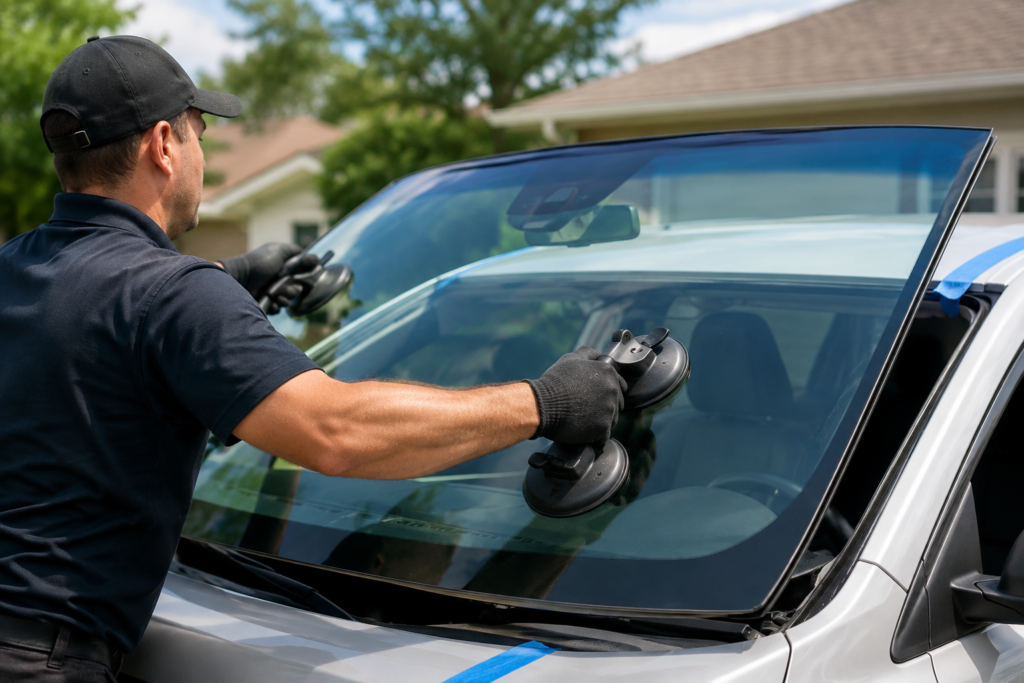
Modern vehicles may use driver-assistance technology for several different functions. Your vehicle may have some, all, or none of the following systems.
Lane departure warning can alert the driver when the system determines that the vehicle is beginning to leave its lane.
Lane-keeping assistance may provide steering input to help the vehicle remain within its lane under applicable operating conditions.
Forward collision warning can alert the driver when the system detects a potential frontal collision.
Automatic emergency braking may apply the brakes when the vehicle detects an imminent collision risk.
Adaptive cruise control can adjust vehicle speed based on surrounding traffic and the distance between vehicles.
Some vehicles use forward-facing camera technology to identify certain road signs and display that information to the driver.
Camera and sensor systems may also help identify pedestrians near the vehicle’s path.
These features depend on the specific equipment installed on the vehicle. A VIN can help identify which safety technologies may apply.
ADAS recalibration may be required when work changes the position, alignment, or operating conditions of a camera or sensor.
Common situations include windshield replacement, removal of a windshield-mounted camera, camera or sensor replacement, front-end collision repair, wheel alignment, suspension repair, changes to vehicle ride height, certain wheel or tire changes, manufacturer-specified repairs, and dashboard or camera warning messages.
Windshield replacement is an especially common reason for windshield camera calibration in Westbury because many forward-facing cameras are mounted directly to the windshield or attached to a bracket connected to the glass.
That doesn’t mean every windshield replacement automatically requires calibration. Requirements depend on the particular vehicle and installed technology.
If you are unsure whether a calibration applies to your vehicle, send us your VIN and details about the work that was recently completed.
Many forward-facing cameras are positioned behind the rearview mirror, attached to a windshield bracket, or aimed through a specific area of the glass.
When the windshield is removed and replaced, the relationship between that camera and the road ahead can change. Even a small difference in camera angle or mounting position may affect how the system interprets lane markings, vehicles ahead, pedestrians, traffic signs, distance, and movement.
Professional calibration after windshield replacement in Westbury helps configure applicable systems according to manufacturer requirements after the new glass has been installed.
If your windshield damage is too extensive for repair and a new windshield is required, our auto glass replacement services can address the glass replacement portion of the service.
On the other hand, minor chips or qualifying small cracks may sometimes be repaired without removing the windshield. Learn more about windshield repair if you are still determining whether replacement is necessary.
There is no single calibration procedure that applies to every vehicle. Manufacturer requirements determine whether a vehicle needs static calibration, dynamic calibration, or a combination of both.
Static calibration is performed while the vehicle remains stationary.
Depending on the vehicle, the procedure may require manufacturer-specific targets, specialized equipment, precise measurements, level flooring, controlled lighting, accurate vehicle positioning, and specific tire pressure or vehicle-loading conditions.
The placement of the vehicle and calibration equipment matters because the system may use those reference points to determine the correct position of the camera or sensor.
Dynamic calibration is performed while the vehicle is driven under manufacturer-specified conditions.
Requirements can include particular road speeds, clearly marked lanes, suitable traffic conditions, appropriate weather, a designated driving distance, or certain types of roads.
Some vehicles require both static and dynamic calibration.
The correct procedure is based on the vehicle manufacturer’s requirements rather than customer preference. That is also why providing the vehicle’s VIN is useful when scheduling service.
A warning light or unusual driver-assistance behavior does not automatically mean that calibration is the problem. However, certain situations may justify further evaluation.
Possible indicators include:
These symptoms do not confirm a calibration issue on their own. Damaged sensors, wiring problems, electronic faults, or other vehicle issues may produce similar symptoms and could require additional diagnostics.
For sudden or severe auto glass damage that also affects visibility or vehicle operation, our emergency auto glass repair services may be the appropriate starting point.
The exact procedure varies by vehicle, but professional ADAS calibration generally follows a structured process.
The year, make, model, VIN, trim, and installed safety features are identified so the appropriate manufacturer requirements can be reviewed.
The technician may inspect the replacement glass, camera bracket, camera position, and surrounding components.
Relevant dashboard warnings, camera messages, or diagnostic trouble information may be reviewed when applicable.
Manufacturer-required conditions may need to be verified before calibration. These can include tire pressure, fuel level, vehicle loading, alignment, and ride height.
The required targets, diagnostic equipment, or road-driving procedure are prepared according to the vehicle’s specified method.
Static, dynamic, or combination calibration is completed as required.
The procedure is checked to confirm that the calibration process completed successfully.
Available service or calibration records can be provided after the procedure.
Calibration is intended to address applicable camera or sensor alignment requirements. It should not be expected to repair unrelated electronic, wiring, sensor, or mechanical faults.
Mobile convenience is important for busy Nassau County drivers, particularly customers who rely on their vehicles for commuting, work, family responsibilities, and errands. The Clear Vision Auto Glass customer profile emphasizes minimizing downtime and making service easier for people with demanding schedules.
However, ADAS calibration has different location requirements than many standard auto glass services.
A windshield replacement may be available through mobile service when conditions allow, but some calibration procedures require controlled indoor conditions, level flooring, precise target placement, specialized diagnostic equipment, proper lighting, and a clear calibration area.
Dynamic calibration may instead depend on suitable roads, lane markings, traffic, speed, and weather conditions.
For that reason, we do not assume that every vehicle safety-system calibration in Westbury can be completed in a residential driveway, parking lot, workplace, or commercial site.
The proper location depends on the vehicle, manufacturer procedures, calibration method, equipment requirements, weather, traffic, and available working space.
Westbury drivers regularly navigate busy intersections, multi-lane commercial corridors, highway merging, pedestrian activity, shopping-area traffic, and daily commuting throughout Nassau County.
Routes such as Old Country Road, Jericho Turnpike, Northern State Parkway, and Meadowbrook State Parkway are part of everyday travel around the area. The regional language bank also identifies Old Country Road, Northern State Parkway, and Meadowbrook State Parkway as important Nassau County driving routes.
Drivers may also travel around the Westbury LIRR station area, Roosevelt Field, The Gallery at Westbury Plaza, and other nearby business and shopping districts.
In these environments, features such as lane departure warning, collision warning, pedestrian detection, and adaptive cruise control may support the driver when equipped and operating under appropriate conditions.
Calibration does not guarantee accident prevention. Its purpose is to configure applicable vehicle cameras and sensors according to manufacturer requirements so supported systems can operate as intended.
When calibration is required as part of a covered windshield replacement or other qualifying repair, insurance may be involved.
Clear Vision Auto Glass can assist with windshield replacement estimates, calibration documentation, general claim questions, vehicle and glass information, scheduling coordination, communication about required services when applicable, and available service records.
Visit our auto glass insurance assistance page for more information about how we help customers with the claims process.
Coverage ultimately depends on the customer’s individual policy and circumstances. We do not guarantee insurance approval, full coverage, deductible waivers, reimbursement, or zero out-of-pocket cost.
Modern windshield replacement involves more than glass on vehicles equipped with advanced cameras and safety systems.
Clear Vision Auto Glass combines experience with modern windshield technology and attention to manufacturer procedures with straightforward customer communication. We focus on explaining why a service may be required instead of treating calibration as something every vehicle automatically needs.
Our service includes windshield replacement and calibration coordination when applicable, insurance assistance, passenger and commercial vehicle experience, and coverage throughout Nassau County.
Clear communication is especially important for local drivers who are balancing work, commuting, family schedules, and other responsibilities. Convenience, response time, insurance assistance, and confidence in professional workmanship are among the priorities identified for Clear Vision Auto Glass customers.
Clear Vision Auto Glass provides ADAS and windshield camera calibration service for qualifying vehicles in Westbury and nearby Nassau County communities.
Drivers from Carle Place, Garden City, Mineola, Hicksville, East Meadow, New Cassel, Jericho, Uniondale, Salisbury, and Old Westbury may also be within our broader service area.
Visit our auto glass service areas to learn more about the communities we serve.
Whether your vehicle recently received a new windshield, underwent collision or suspension work, or is displaying a camera-related warning message, we can help determine whether calibration may be required based on the vehicle’s equipment and manufacturer procedures.
ADAS calibration often connects with other auto glass services, especially when windshield replacement is involved.
For damaged glass that requires complete replacement, explore our auto glass replacement services.
Small windshield chips and qualifying minor cracks may instead be candidates for windshield chip repair, which typically does not involve removing the windshield.
If a side, door, rear, quarter, or other vehicle window is physically damaged, our window glass repair services focus on repairing or replacing the affected automotive glass.
When the glass is intact but a window does not open, close, or move properly, see our window mechanism repair services.
For uncommon glass applications or specialized installation needs, our specialty glass installation services may apply.
We also provide glass-related services for qualifying fleet and specialty vehicles. Learn more about commercial and specialty vehicle glass services.
If you’re unsure which service your vehicle requires, contact Clear Vision Auto Glass and provide your vehicle details, VIN, and information about the work or warning message that prompted your concern.
ADAS calibration is the process of aligning and configuring applicable vehicle cameras or sensors according to manufacturer specifications so supported driver-assistance systems can operate as intended.
No. Many newer vehicles with windshield-mounted cameras may require calibration after replacement, but the requirement depends on the vehicle's year, make, model, trim, and installed technology.
Your vehicle may have ADAS if it includes features such as lane departure warning, forward collision warning, automatic emergency braking, adaptive cruise control, or lane-keeping assistance. Your VIN can help identify the equipment installed on the vehicle.
Static calibration uses specialized targets and equipment while the vehicle remains stationary. Dynamic calibration is performed while driving under manufacturer-specified road and operating conditions. Some vehicles require both procedures.
Some related auto glass services may be mobile, but many calibrations require controlled conditions, specialized equipment, precise target placement, or road testing. The correct service location depends on the vehicle and required calibration procedure.
Timing varies based on the vehicle, calibration method, setup requirements, road conditions, weather, and whether additional diagnostics are necessary.
If manufacturer-required recalibration is not completed, supported driver-assistance features may not operate as intended.
Coverage depends on your policy and the reason calibration is required. When calibration is necessary following a covered windshield replacement, it may also be included in the insurance claim, depending on the policy.
No. Some warning lights may result from damaged sensors, wiring problems, electronic faults, or unrelated vehicle issues. Additional diagnostics may be required.
Provide your vehicle's year, make, model, VIN, details about any recent windshield or vehicle service, and information about dashboard warning messages. Clear photos may also help with the initial assessment.
If your vehicle recently had a windshield replaced, a windshield-mounted camera was removed, or a driver-assistance system is displaying a warning, Clear Vision Auto Glass can help determine whether professional recalibration may be necessary.
We provide ADAS calibration in Westbury, NY, including windshield camera and vehicle technology calibration services for qualifying vehicles throughout Westbury and Nassau County.
Or contact Clear Vision Auto Glass to request service.